

Too often, it’s treated as something individuals manage in isolation. But independence, confidence, and coordination are expressed through neuromotor control in shared spaces, daily routines, and real-world interactions.
That’s where the earliest changes appear.
Timing shifts. Precision softens. Control becomes less consistent.
And by the time these changes are visible, the signal has already begun to pass.
That’s where the earliest changes appear.
Timing shifts. Precision softens. Control becomes less consistent.
And by the time these changes are visible, the signal has already begun to pass.
- Routines require more effort
- Risk emerges before injury
- Confidence in shared environments declines
As neuromotor control becomes less reliable, people don’t just slow down—they step back. They participate less, they hesitate in dynamic spaces, and they withdraw from environments that feel uncertain. Over time, this reduces engagement—and the experiences that help sustain cognitive reserve.
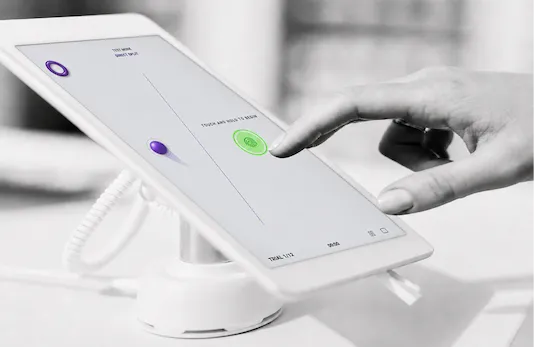
NERON introduces a different approach: identifying and training neuromotor performance before breakdown becomes limitation.
In small, guided group sessions, training becomes shared, functional, and grounded in real-world activity—not isolated exercises. Participants stay engaged—not just improving performance, but maintaining connection to their routines, their environments, and each other. For many, it doesn’t feel like a program; it feels like staying part of everyday life.
NERON introduces a different approach: identifying and training neuromotor performance before breakdown becomes limitation.
In small, guided group sessions, training becomes shared, functional, and grounded in real-world activity—not isolated exercises. Participants stay engaged—not just improving performance, but maintaining connection to their routines, their environments, and each other. For many, it doesn’t feel like a program; it feels like staying part of everyday life.



.webp)