FITNESS & WELLNESS

Build the kind of fitness you can't see

Your Brain's Vital Sign.

Train how the brain supports movement so your clients don't just perform more physical exercise. They train their brain to move with greater control, coordination, and consistency over time.

THE CHALLENGE

Most people train what they can meausre.

Strength. Heart rate. Pace. Recovery time. But the system running all of it; the one deciding how well you coordinate, stabilize, react, and adapt rarely gets trained directly. That system is brain performance.
People feel improvements in control and coordination. But they struggle to prove them or to train them consistently. Over time that shows up not just in performance, but in how confidently they move, recover, and stay consistent in their routines.
Strength & conditioning
Heart rate & output
Recovery tracking
A Different Approach

What changes when performance is part of the program?

When brain performance becomes part of wellness, training shifts from “harder” to smarter, progress becomes something you can track, not just hope for, clients stay engaged because results feel real and improvement becomes a journey, not a streak.Performance isn't defined in controlled conditions.

For fitness programs and trainers, this doesn’t require a new facility, additional staff, or complex equipment. NERON fits into what already exists, using simple tools and guided sessions to introduce a new layer of training.

It becomes a natural extension of your current programs, helping differentiate your offering and attract clients looking for something beyond traditional fitness alone.

See Decline Before Its Visible

In wellness, real progress often shows up as better control, not more output.

PAST INTERVENTIONS
More reps
More distance
More intensity
Higher output
WITH NERON
Smoother movement
Fewer corrections
Better stability under fatigue
Sharper coordination when life gets busy

This isn't about replacing staff expertise.
It's about reducing unknowns in the highest-stakes moments.

WHY THIS MATTERS FOR SPORTS PERFORMANCE

Are the demands we're placing on this athlete aligned with what their performance can actually support right now?

When brain performance is more stable, it supports faster decisions, cleaner execution, and consistent control under pressure. When that margin narrows, performance may still look strong in controlled settings — but becomes less reliable as speed, fatigue, or complexity increase.

These shifts don't define the athlete. They reveal how performance is responding to current conditions — which can change with workload, fatigue, recovery, and environment — and where risk begins to surface.
FOR PERFORMANCE DIRECTORS & SPORTS SCIENCE TEAMS  
Objective support for decisions about training load, recovery timing, and competitive readiness.
FOR ATHLETIC TRAINERS & MEDICAL STAFF  
Context for return-to-play conversations that goes beyond symptom resolution and self-report.
FOR COACHES BALANCING READINESS WITH RISK
A signal for when the athlete's brain is aligned with what the session or competition demands.
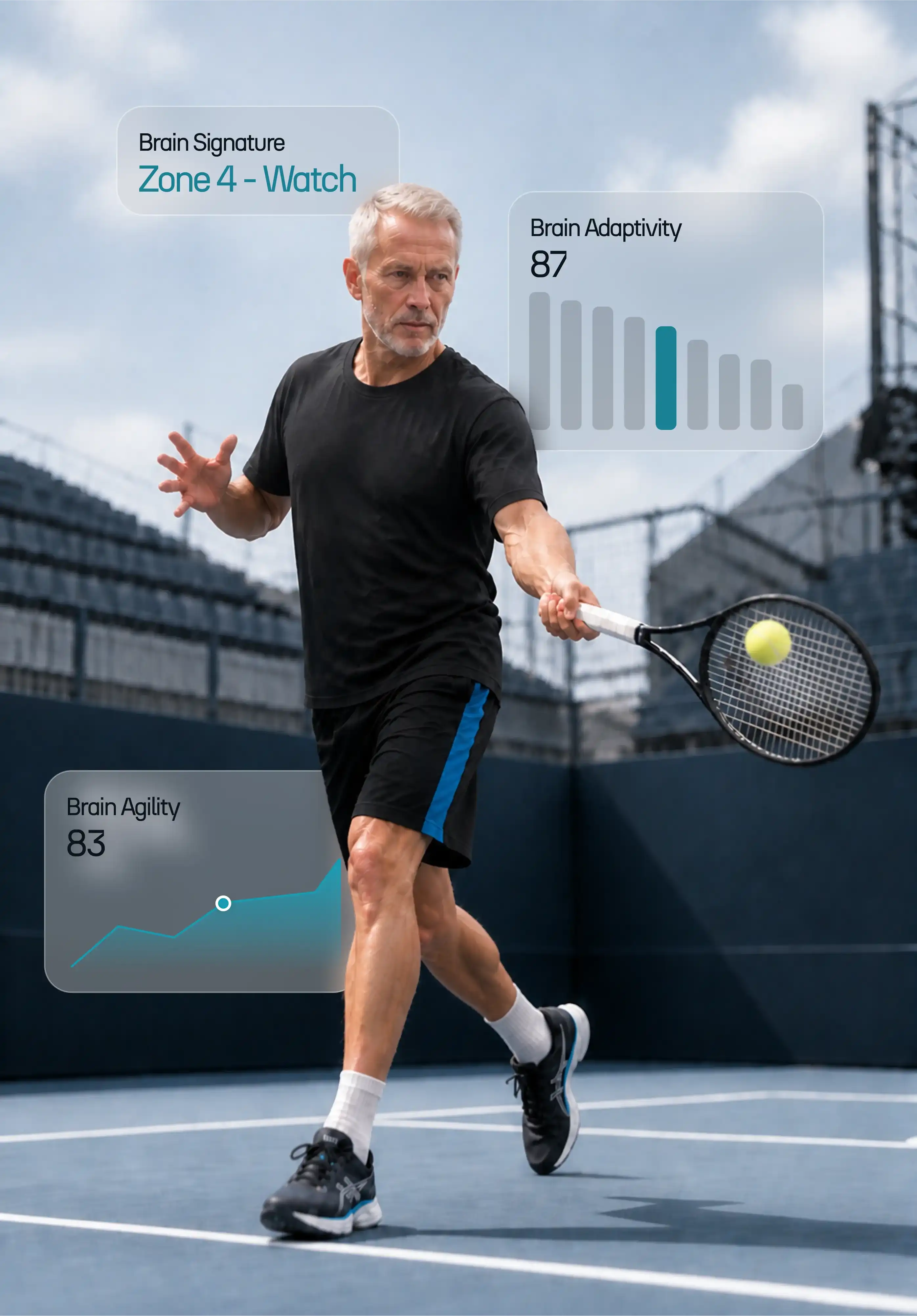
Brain Adaptivity
75
Brain Signature
Zone 5 - Optimal
Brain Agility
94
WHY THIS MATTERS FOR SPORTS PERFORMANCE

How well is their system holding steady right now and what happens as load, speed, or complexity increases?

When performance is more consistent, it supports stable control, smoother movement, and more reliable coordination as demands rise. When that margin narrows, movements may still look strong but begin to break down under fatigue, speed, or added complexity.When brain performance is more stable, it supports faster decisions, cleaner execution, and consistent control under pressure. When that margin narrows, performance may still look strong in controlled settings but becomes less reliable as speed, fatigue, or complexity increase.

For fitness programs and trainers, this doesn't require a new facility, additional staff, or complex equipment. NERON fits into what already exists, introducing a new layer of training that becomes a natural extension of your current programs.
FOR COACHES & TRAINERS
A measurable performance signal that matches what your clients already feel, and gives you something objective to train toward.
FOR WELLNESS PROGRAMS
A differentiator that shows deeper client outcomes beyond the metrics you already track.
FOR INDIVIDUALS
Proof of progress in the wins that used to be impossible to measure.
HOW TO READ IT

Brain Signature: Everyday Demand Context

As Brain Signature patterns become visible over time, something else becomes clearer; what someone's current level of performance comfortably supports in daily life. Not a label. A direction.

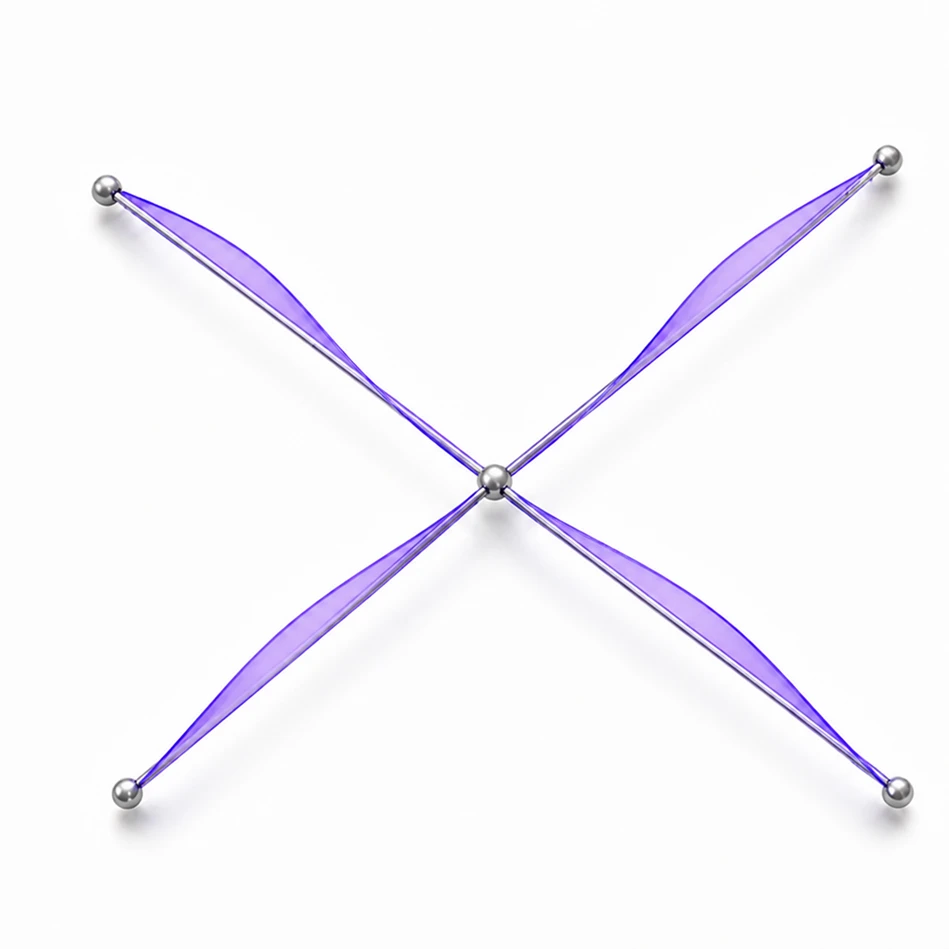
IDEAL Neuromotor control
When performance is more consistent, people engage more freely in group activities, shared spaces, and the everyday routines that shape daily life.
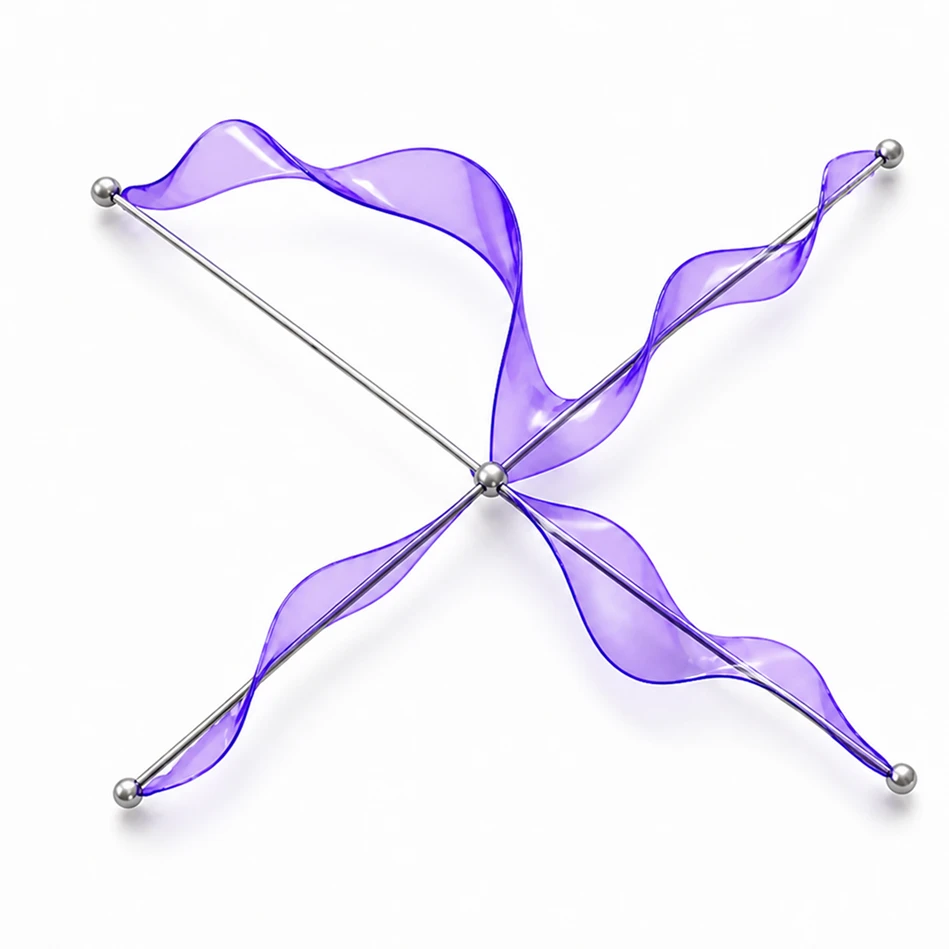
Compromised Neuromotor control
When that consistency shifts, it shows up not just in movement but in how much someone participates, engages, and feels at ease in their environment.

The goal isn't to reach a fixed point. It's to build and maintain a level of performance that supports confident, active living over time.

HOW IT’S USED

Add a layer of training your current program doesn't have yet.

NERON is used to:
Add brain performance visibility alongside the physical metrics you already track
Track how control changes under load, stress, or fatigue across the training cycle
Support training that builds steadiness, responsiveness, and coordination — not just output
Keep client motivation high with measurable progress that matches lived experience
WHO THIS IS FOR
  • Fitness and wellness programs
  • Coaches and trainers who want deeper client outcomes
  • Individuals training for longevity, steadiness, and capability
  • Organizations building whole-person performance models
Training Alignment
Connect brain performance to how and when you push clients harder
Progress Tracking
Measure the improvements clients feel but couldn't previously prove
Load Management
Know when the system is ready for more — and when it needs recovery
Consistency
Track steadiness across sessions, not just peak moments
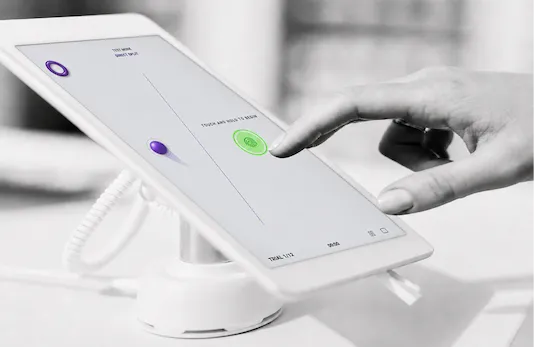
Individuals use a tablet to guide movement toward simple on‑screen targets.