SPORTS PERFORMANCE & RECOVERY

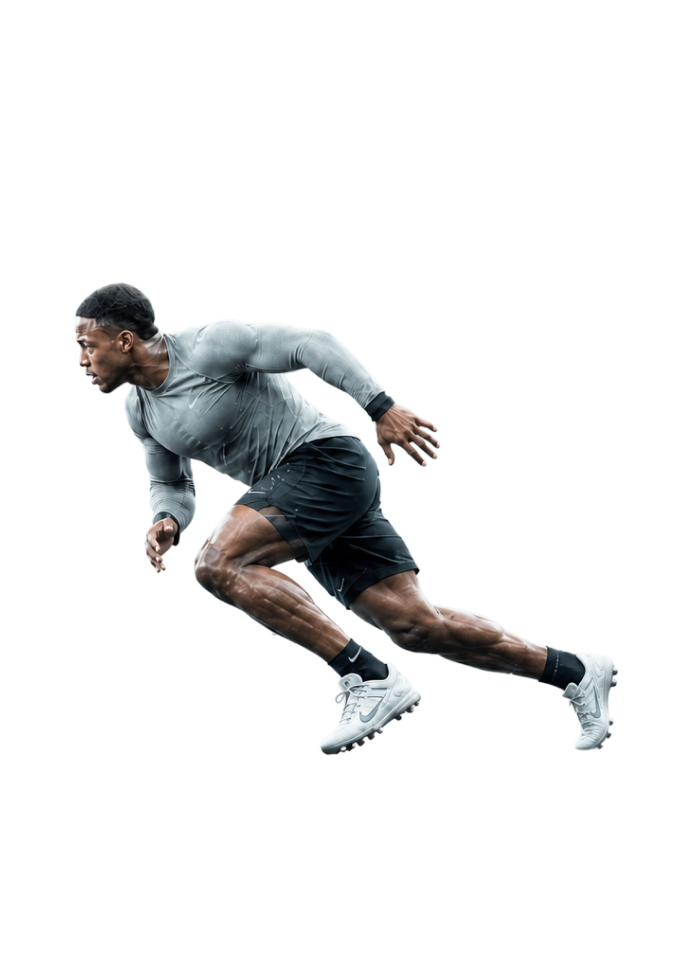
Readiness isn't what athletes say. It's what shows up under demand.

Your Brain's Vital Sign.

See how performance is holding under pressure so readiness, recovery, and return-to-play decisions are grounded in more than observation or feel.

THE CHALLENGE

Performance doesn't usually fail at the peak moment.

It fails in the moment before when timing is off, when decisions slow down, when control slips under load.
Athletes and teams live in a world of confidence and adrenaline. But the body can be ready while the brain is still compensating.
Sports organizations measure plenty: strength, speed, conditioning, workload, sleep, recovery behaviors, and how someone feels. But readiness is often decided in the grey area:
'They look fine.' 'They say they're good.' 'There's no obvious reason not to play.'
The toughest calls are made with incomplete information. And those decisions don't just affect performance, they shape confidence, trust, and long-term availability.
Physical metrics
Self-report
Observation & feel
THE CHALLENGE

What happens under pressure reveals everything.

Performance isn't defined in controlled conditions.

It's defined when speed increases, decisions compress, and demands stack all at once.

That's where small breakdowns show up first: timing shifts, precision slips, control becomes less consistent.

And by the time those breakdowns are visible, the signal has already passed.
  • Decision quality degrades before it looks like a problem
  • Risk surfaces before it registers as injury
  • Return timing gets decided on incomplete information

See Decline Before Its Visible

When brain performance is tracked over time, readiness becomes a signal not a guess.

PAST INTERVENTIONS
Assumed
Denied
Pressured
Incomplete Information
WITH NERON
Measurable readiness
Detectable fatigue
More confident return decisions
Reduced Unknown

This isn't about replacing staff expertise.
It's about reducing unknowns in the highest-stakes moments.

WHY THIS MATTERS FOR SPORTS PERFORMANCE

Are the demands we're placing on this athlete aligned with what their performance can actually support right now?

When brain performance is more stable, it supports faster decisions, cleaner execution, and consistent control under pressure. When that margin narrows, performance may still look strong in controlled settings — but becomes less reliable as speed, fatigue, or complexity increase.

These shifts don't define the athlete. They reveal how performance is responding to current conditions — which can change with workload, fatigue, recovery, and environment — and where risk begins to surface.
FOR PERFORMANCE DIRECTORS & SPORTS SCIENCE TEAMS  
Objective support for decisions about training load, recovery timing, and competitive readiness.
FOR ATHLETIC TRAINERS & MEDICAL STAFF  
Context for return-to-play conversations that goes beyond symptom resolution and self-report.
FOR COACHES BALANCING READINESS WITH RISK
A signal for when the athlete's brain is aligned with what the session or competition demands.
Brain Adaptivity
75
Brain Signature
Zone 5 - Optimal
Brain Agility
94
WHY THIS MATTERS FOR SPORTS PERFORMANCE

Are the demands we're placing on this athlete aligned with what their performance can actually support right now?

When brain performance is more stable, it supports faster decisions, cleaner execution, and consistent control under pressure. When that margin narrows, performance may still look strong in controlled settings, but becomes less reliable as speed, fatigue, or complexity increase.

These shifts don't define the athlete. They reveal how performance is responding to current conditions, which can change with workload, fatigue, recovery, and environment, and where risk begins to surface.
FOR PERFORMANCE DIRECTORS & SPORTS SCIENCE TEAMS  
Objective support for decisions about training load, recovery timing, and competitive readiness.
FOR ATHLETIC TRAINERS & MEDICAL STAFF  
Context for return-to-play conversations that goes beyond symptom resolution and self-report.
FOR COACHES BALANCING READINESS WITH RISK
A signal for when the athlete's brain is aligned with what the session or competition demands.
HOW TO READ IT

Brain Signature: Performance Under Load

As readiness becomes clearer over time, something else comes into focus:
how well an athlete's current level of control holds up as demands increase.
Not a label. A signal.

PERFORMING AT FULL CAPACITY
Faster decisions, cleaner execution, and consistent control under pressure — the system is holding steady as demands increase.
WHEN THE SIGNAL STARTS TO SLIP
Movements may still look strong, but begin to break down under fatigue, speed, or complexity — often before anyone can see it.

These shifts don't define the athlete. They reveal how performance is responding to current conditions — and where risk begins to surface.

HOW IT’S USED

Practical applications for performance teams.

NERON is used to:
Establish baselines before seasons or high-load phases
Monitor change during travel, fatigue, overload, and high cognitive demand
Compare pre- and post-event states when performance questions arise
Support return-to-play conversations with objective context
Track trends across a season — not just single games
WHO THIS IS FOR
  • Performance directors and sports science teams
  • Athletic trainers and medical staff
  • Coaches balancing readiness with risk
  • Athletes who want confidence — not guesswork
Baseline
Establish baselines before seasons or high-load phases
Load Tracking
Monitor how brain performance responds to training, travel, and fatigue
Recovery
Know when the system is genuinely ready — not just symptom-free
Season Trends
Track patterns across a full season, not just isolated sessions
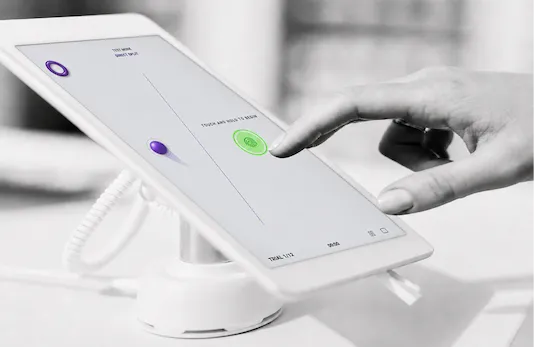
Individuals use a tablet to guide movement toward simple on‑screen targets.